 Ultimate guide
Cost of Electrical Panel Upgrade 2026: Complete Guide
Table of Contents
- What Drives the Cost of an Electrical Panel Upgrade in 2026
- 100 Amp to 200 Amp Panel Upgrade Cost: What to Expect
- Signs You Need a New Breaker Box
- Electrical Panel Replacement Permit Requirements
- How Long Does an Electrical Panel Upgrade Take?
- Smart Panels, EV Chargers, and Other Cost Factors
- Frequently Asked Questions
Last Updated: September 12, 2026
What Drives the Cost of an Electrical Panel Upgrade in 2026
The cost of an electrical panel upgrade in 2026 depends on three things: the amperage you need, the condition of your existing service entrance, and the labor required to bring everything up to current code. This guide from Curtis Capra Electrician breaks down each factor so you can budget with confidence.
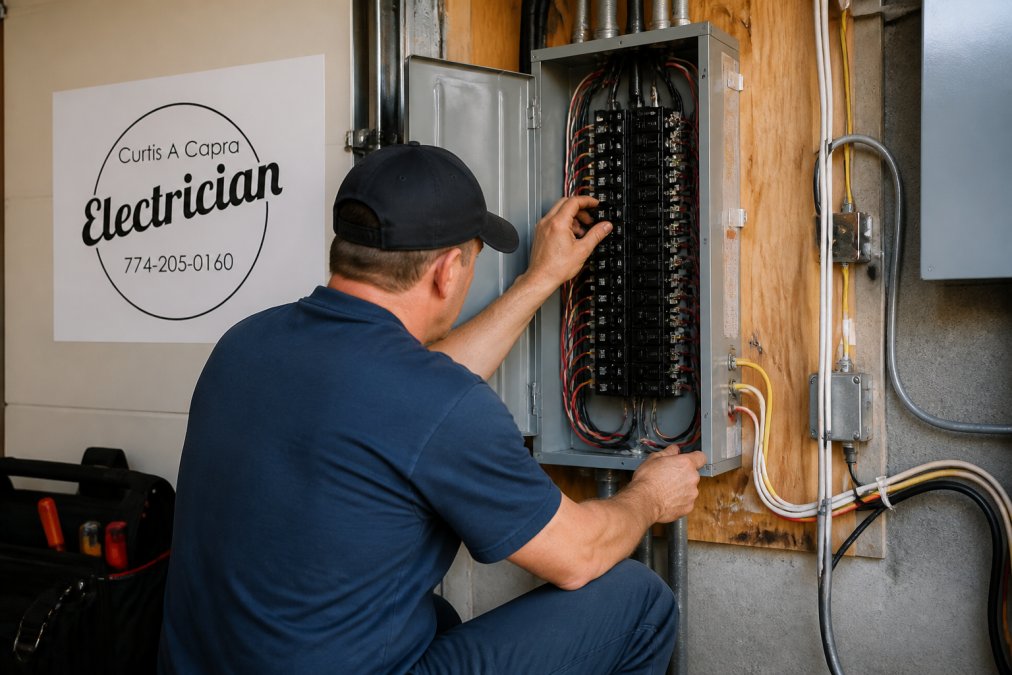
An electrical panel upgrade is the replacement of your home's main breaker box and often the service entrance equipment that feeds it. It is not a cosmetic job. It is the single point where utility power enters your home, and every circuit you rely on passes through it.
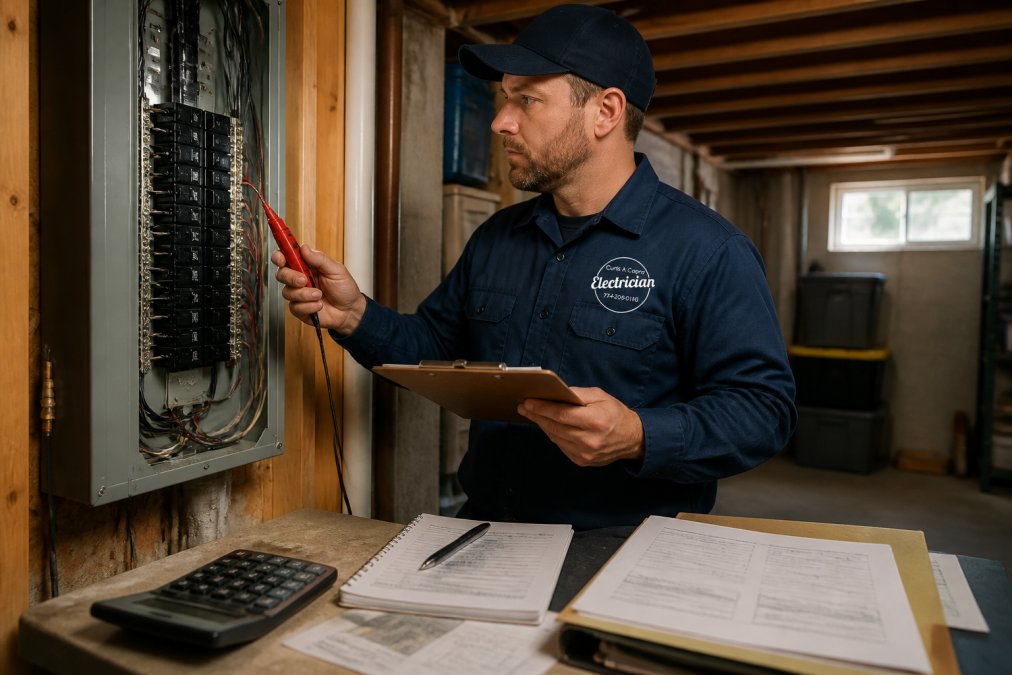
Here's the part most homeowners get wrong: they assume the panel itself is the expensive part. In practice, the panel is often the cheapest line item. Labor, permits, and service entrance work drive the total.
Amperage and Panel Type
Amperage is the deciding cost factor. A 100-amp service that needs to become 200 amps requires a heavier service entrance, a larger meter socket, and thicker conductors. A straight replacement at the same amperage costs far less because the existing wiring and mast can often stay.
Panel type matters too. Older fuse boxes and discontinued breaker panels frequently have no replacement parts available, so the entire assembly comes out. Modern panels accept AFCI and GFCI breakers, which many current circuits require.
Labor and Material Breakdown
Material costs cover the panel, main disconnect, breakers, grounding electrode conductor, and bonding hardware. Labor covers removal, mounting, wiring, load calculation, and inspection coordination.
The split between the two shifts depending on your home. A straightforward swap in an accessible basement leans toward materials. A panel buried behind finished drywall, or one with aluminum wiring or knob-and-tube circuits feeding it, leans heavily toward labor.
100 Amp to 200 Amp Panel Upgrade Cost: What to Expect
A 100 amp to 200 amp panel upgrade costs more than a like-for-like replacement because the service entrance itself changes. Expect the largest cost drivers to be the new meter socket, the heavier service conductors, and the utility coordination.
Most homes built before the 1980s were wired for 100 amps or less. That was reasonable when the biggest loads were a range and a refrigerator. It is not reasonable now.
Cost Ranges by Upgrade Type
Pricing varies by region, service entrance condition, and utility requirements, but the following ranges reflect what most homeowners see in 2026 for a straightforward residential project. These figures cover labor, materials, permit, and standard utility coordination, they exclude drywall repair, panel relocation, or wiring remediation.
| Upgrade Type | Typical Total Cost Range | What Changes | Main Cost Drivers |
|---|---|---|---|
| Same amperage replacement (100A to 100A) | $1,200 - $2,500 | Panel and breakers only | Labor, permit, panel hardware |
| 100A to 200A heavy-up | $2,500 - $5,500 | Panel, meter socket, service conductors, mast | Utility coordination, new service entrance, heavier conductors |
| 200A to 400A | $5,000 - $10,000+ | Everything above plus larger conduit and gear | Commercial-grade equipment, engineering review, larger meter base |
| Sub-panel addition only | $800 - $2,000 | New sub-panel and feeder circuit | Circuit run length, available panel capacity |
These ranges assume an accessible panel location, copper conductors, and a standard overhead service drop. Add 15-30% for underground service, panel relocation, or a service mast replacement.
What Actually Drives the Price Up
A heavy-up is the term for increasing your service amperage, and it is the upgrade most older homes actually need. The 200-amp target has become the practical standard because it leaves room for an EV charger, a heat pump, and a standby generator without another service change later.
The line items that separate a $2,500 job from a $5,500 job are almost never the panel itself. They are:
- Meter socket replacement, a 100-amp socket cannot accept 200-amp service conductors, so it must be swapped. This is a utility-coordinated item.
- Service entrance conductors, 200-amp service requires larger gauge wire (typically 2/0 copper or 4/0 aluminum) than a 100-amp service.
- Mast and weatherhead, if the existing mast is undersized or corroded, it comes out with the panel.
- Grounding electrode system, current code requires a grounding electrode conductor sized to the new service, plus bonding of water and gas piping where applicable.
- Load calculation and permit, required before the utility will reconnect.
Why the 200-Amp Target Is the Practical Standard
A 200-amp service gives you roughly 48,000 watts of capacity at 240 volts (energy.gov). A typical modern home with central air, an electric range, an electric dryer, and a heat pump can approach 100 amps of demand on its own. Add a Level 2 EV charger (typically 32-48 amps continuous) and you are past what a 100-amp service can safely carry.
That is why most electricians treat 200 amps as the floor for any home that plans to add major loads. Going to 400 amps is usually reserved for homes with multiple EV chargers, electric vehicle-to-home backup, or large outbuilding sub-panels.
Signs You Need a New Breaker Box
The clearest signs you need a new breaker box are breakers that trip repeatedly under normal load, a panel that is warm to the touch, rust or scorch marks inside the enclosure, and fuses instead of breakers. Any of these warrants an inspection by a licensed electrician before you add new appliances.
Some warning signs are obvious. Others are easy to dismiss.
- Breakers trip when the air conditioner and microwave run at the same time
- The panel cover feels warm or you smell a faint burning odor
- You see rust, corrosion, or water staining inside the enclosure
- The panel is a discontinued brand with no available replacement breakers
- You have no open slots left for a new circuit
- Your insurance carrier has flagged the panel type during underwriting
That last point catches homeowners off guard. Some carriers now ask about panel brand and type during policy review, and certain discontinued panels raise questions about insurability. If your carrier has raised it, that is a signal worth acting on.
Electrical Panel Replacement Permit Requirements
Electrical panel replacement permit requirements vary by jurisdiction, but nearly every municipality requires a permit for a service change. The permit covers the wiring inspection and the final sign-off, and it protects you if the work is ever questioned during a home sale.
The typical sequence looks like this:
- The licensed electrician pulls the permit before any work begins
- The utility is notified for a scheduled disconnect
- Rough inspection happens after wiring, before the panel is energized
- The utility reconnects and the inspector signs off
- You receive documentation of the completed inspection
The National Electrical Code sets the baseline standard that local amendments build on. Your electrician should be working from the edition your jurisdiction has adopted, not a generic checklist.
How Long Does an Electrical Panel Upgrade Take?
A standard panel replacement takes one day for the on-site work, with the full process from permit to final inspection typically spanning one to three weeks. The variable is scheduling, not labor.
The utility disconnect and reconnect is the biggest scheduling factor. Some utilities coordinate within days. Others take longer, and your home will be without power during the swap window.
Here is how the time typically breaks down:
- Permit application and approval: a few business days
- Utility disconnect scheduling: varies widely by provider
- On-site panel replacement: one working day in most cases
- Rough inspection: scheduled after wiring is complete
- Utility reconnect and final inspection: a few days after rough sign-off
If your project includes a service mast replacement or a meter socket relocation, add time. Those items often require coordination with the utility beyond a standard reconnect.
Smart Panels, EV Chargers, and Other Cost Factors
Smart panel integration and EV charger readiness are the two cost factors most generic pricing guides skip entirely, and they are the two most likely to affect your total in 2026. Both are easier and cheaper to include during a panel upgrade than to add afterward.
Smart Panel Integration Costs
A smart panel replaces the conventional breaker box with a unit that monitors per-circuit energy use, supports remote switching, and in some models enables load management that lets you add large loads without a service upgrade. Brands in this category include SPAN, Lumin, and Leviton's smart load center line.
The hardware premium over a conventional 200-amp panel is typically $1,500 - $3,500 depending on model and circuit count. The labor is largely the same because the panel is already open and the electrician is already pulling circuits. What changes is the commissioning step, pairing the panel to your home network, labeling circuits in the app, and configuring any load-management rules.
The practical payoff is load management. A smart panel can shed an EV charger or electric dryer when total demand approaches the service limit, which in some homes avoids the cost of a 400-amp upgrade entirely. If your load calculation comes back marginal for 200 amps, a smart panel is often cheaper than going to 400.
EV Charger Readiness: The Circuit-Level Math
Running a dedicated 240-volt circuit for a Level 2 EV charger while the panel is open typically adds $400 - $1,200 to the project, depending on run length and whether the circuit is fished through finished walls. Done as a standalone service call later, the same circuit commonly runs $800 - $2,000 because the electrician has to open the panel, pull a separate permit, and schedule a return visit.
A Level 2 charger draws 32-48 amps continuous, which under code is treated as a continuous load and requires conductors and a breaker sized at 125% of that draw. In practical terms, a 48-amp charger needs a 60-amp breaker and a circuit rated for it. That load is the single biggest reason a 100-amp service cannot support an EV charger alongside normal household demand.
If you are planning an EV purchase in the next few years, the cheapest time to run the conduit and circuit is during the panel upgrade. Even if you do not install the charger yet, running the circuit now avoids a second permit and a second panel opening later.
U.S. Department of Energy guidance on home charging explains how home charging load affects service sizing, which is exactly why the load calculation matters before you commit to an amperage.
Other Factors That Move the Number
- Whole-home surge protection, a panel-mounted surge protective device typically adds $200 - $500 installed.
- Generator interlock kit, a manual interlock and inlet for a portable generator runs $300 - $800 installed; a transfer switch for a standby generator is a separate, larger line item.
- Panel relocation, moving the panel to meet working-clearance requirements can add $500 - $1,500 in labor and materials, plus drywall repair.
- Grounding and bonding corrections, bringing the grounding electrode system up to current code commonly adds $200 - $600.
- Aluminum branch wiring remediation, if aluminum branch circuits are discovered during the swap, remediation with CO/ALR devices or copper pigtails can add $1,000 - $4,000 depending on circuit count.
Why This Section Matters More Than the Panel Price
The panel itself is often the smallest line item on the invoice. The decisions you make while the panel is open, smart panel or conventional, EV circuit now or later, surge protection, generator provisions, determine whether your total lands near the low end or the high end of the range. Getting those decisions right the first time is where the real savings are.
Frequently Asked Questions
How much does it cost to upgrade a 100 amp electrical panel to a 200 amp panel?
The cost of a 100 amp to 200 amp panel upgrade depends on labor, permit fees, and whether the service entrance and meter socket need replacement. Most homeowners should expect a range that starts in the low thousands. Curtis Capra Electrician provides free quotes for Cape Cod homeowners.
Does an electrical panel upgrade require a building permit?
Yes. Electrical panel replacement permit requirements vary by town, but nearly all municipalities require a permit and inspection before the new panel is energized. The permit covers the load calculation, grounding electrode, and bonding work. Skipping the permit can void your home insurance and create problems when you sell. A licensed electrician handles the paperwork for you.
How long does an electrical panel upgrade take from start to finish?
The on-site work usually takes one day for a straightforward swap. If the service mast, meter socket, or wiring inspection reveals issues, it can stretch to two or three days. The permit and inspection process adds a few days to a couple of weeks depending on your town's schedule. Curtis Capra Electrician gives you a clear timeline before work begins.
Is updating an electrical panel worth the investment?
An upgraded panel adds capacity for EV chargers, heat pumps, and modern appliances while improving safety. It can also satisfy home insurance requirements and support a higher resale value. If your current panel is a 100-amp unit with fuses or known brands with recall issues, the upgrade is often necessary rather than optional.