 ultimate-guide
Standby Generator Installation Requirements 2026
Table of Contents
- Standby Generator Installation Requirements Overview
- Permitting and Building Code Submittal Requirements
- Generator Clearance Distance Requirements and Site Placement
- Electrical Panel Upgrade for Generator Installation
- Fuel Source and Connection Standards
- Hiring a Licensed Electrician for Generator Installation
- Inspection, Safety Certification, and Long-Term Compliance
- Conclusion
- Frequently Asked Questions
Last Updated: September 23, 2026
Standby Generator Installation Requirements Overview
A standby generator installation requires careful planning, proper permitting, and adherence to multiple building codes and safety standards. Understanding the standby generator installation requirements is essential before breaking ground. At Curtis Capra Electrician, we've guided homeowners through this process for over 25 years, and the regulatory landscape continues to evolve.
The installation process involves site preparation, electrical integration, fuel source configuration, and multiple inspections. Building codes, utility interconnection standards, and local permitting requirements all play critical roles in whether your installation passes inspection and operates safely.
Permitting and Building Code Submittal Requirements
Before purchasing or installing a standby generator, you'll need to submit plans to your local building department for review and approval. Installing without a permit can result in failed final inspection, liability issues, and complications when selling your property.
Permit submittal requires detailed documentation: equipment specifications, electrical schematics showing the automatic transfer switch connection, fuel source details, and site plans showing clearance distances. The National Electrical Code (NEC) governs electrical aspects, while local amendments often add stricter requirements.
Common submittal requirements include load calculations showing how much power your generator will supply, documentation of the automatic transfer switch rating and installation location, and proof that the unit meets EPA emissions standards if applicable. Some jurisdictions require a licensed electrician's seal on plans.
Generator Clearance Distance Requirements and Site Placement
Proper placement of your standby generator involves more than finding a convenient spot. Clearance distance requirements protect your property, neighbors, and service personnel from exhaust, noise, and safety hazards.
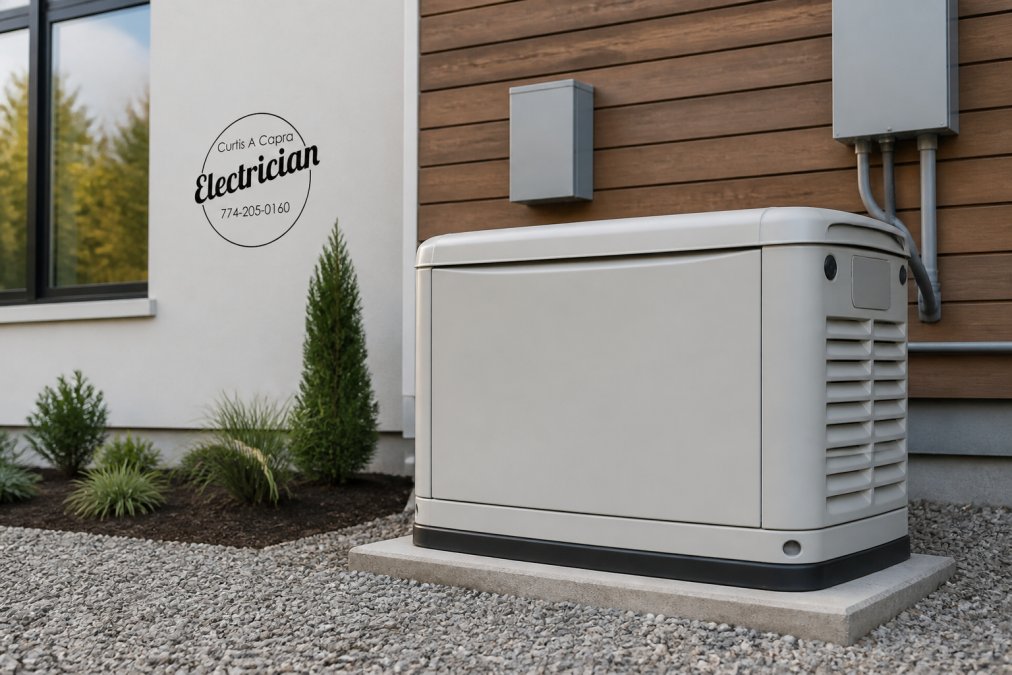
Most jurisdictions require a minimum 5-foot clearance from property lines, windows, doors, and air intakes. The generator should sit on a level, well-draining concrete pad (typically 4 inches thick) with anchor bolts rated for seismic activity in certain regions.
Noise ordinances often restrict generator operation during certain hours and limit sound levels to 70-75 decibels at the property line. Trenching for fuel lines and electrical conduit must comply with local utility locating requirements, always call before you dig.
Electrical Panel Upgrade for Generator Installation
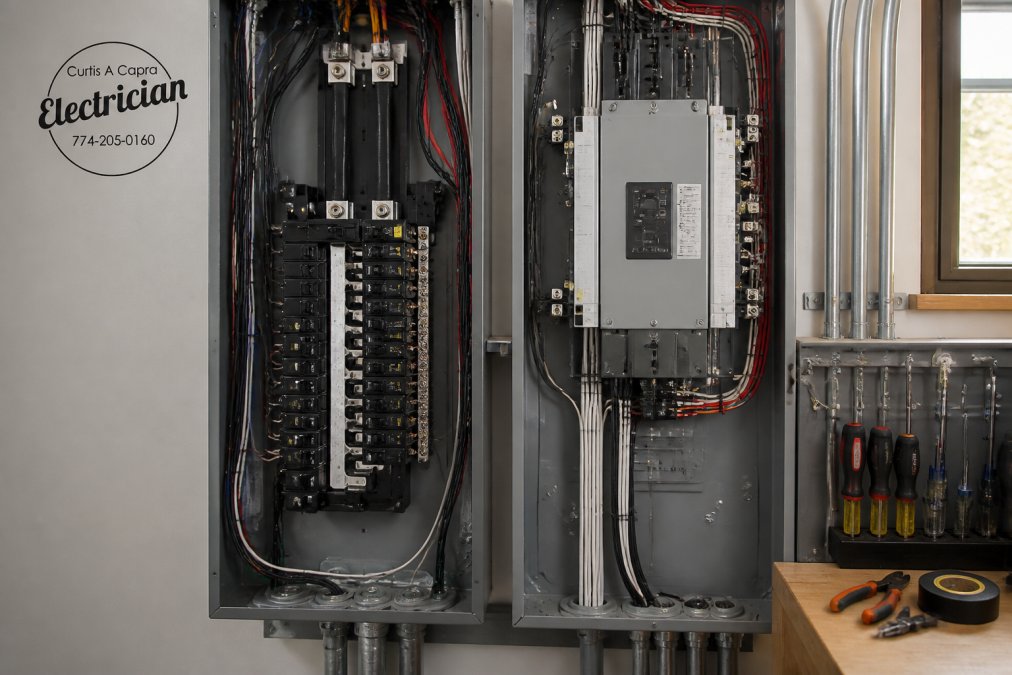
Your home's electrical panel must accommodate the automatic transfer switch that directs power from your generator to critical circuits during an outage. Most modern panels require a main breaker upgrade or additional sub-panel installation. Curtis Capra Electrician ensures your installation meets current standards, which include updated grounding and arc-fault protection requirements.
The automatic transfer switch prevents backfeeding power into utility lines and ensures seamless switching between utility and generator power. Installation requires breaker space in your panel, proper grounding, and voltage drop calculations. The National Electrical Code (NEC Article 700) requires surge protection devices rated for the generator's output capacity, protecting sensitive electronics and HVAC systems from voltage spikes.
Load calculation determines which circuits your generator can support. A 20-kilowatt generator won't run your entire home simultaneously; it powers essential loads like heating, refrigeration, and critical outlets. The calculation process involves:
- Nameplate amperage method: Adding the full-load current of each connected appliance (found on the equipment label or in the NEC Table 430.248)
- Demand factor application: Reducing the total by a percentage because not all circuits run simultaneously (typically 70-80% for residential loads)
- Generator capacity matching: Confirming the generator's continuous rating (in kilowatts) exceeds the calculated demand
For example, a home with a 200-amp service, central air conditioning (40 amps), electric water heater (30 amps), and essential lighting/outlets (25 amps) totals roughly 95 amps at full demand. A 20-kilowatt generator can handle this load if the air conditioner cycles appropriately.
Fuel Source and Connection Standards
Your generator runs on natural gas, propane, or diesel, each with different installation standards and maintenance requirements.
Hiring a Licensed Electrician for Generator Installation
Your standby generator installation requires a licensed electrician. Electrical codes exist because improper installation causes fires, electrocution, and equipment damage.
Inspection, Safety Certification, and Long-Term Compliance
After installation, your generator requires multiple inspections before it can operate legally. The electrical inspector verifies the automatic transfer switch installation, grounding, panel modifications, and conduit routing. The building inspector confirms the concrete pad, clearance distances, and fuel system compliance. All inspection reports must be filed with your local building department and retained for your records.
-
Monthly exercise run date and duration (minimum 20 minutes under load)
-
Oil level and condition (visual inspection)
-
Fuel level and tank integrity (for propane or diesel systems)
-
Battery voltage and terminal corrosion (for automatic start systems)
-
Transfer switch operation test (verify automatic and manual switching functions)
-
Annual professional service date and scope (oil change, filter replacement, load test results)
-
Any repairs or parts replacement (with date and description)
-
Automatic transfer occurs within code-required time limits (typically 10 seconds)
-
No power interruption to critical circuits during transfer
-
Proper voltage and frequency from the generator
-
Correct return to utility power when outage ends
Conclusion
Installing a standby generator involves navigating permits, building codes, electrical standards, fuel system requirements, and multiple inspections. The process is complex, but the result is reliable backup power when utility outages occur. Curtis Capra Electrician has guided Cape Cod homeowners through standby generator installation requirements for over two decades, handling everything from initial load calculations through final inspection and long-term maintenance.
Frequently Asked Questions
What are the 2026 clearance requirements for home standby generators?
Standby generators must maintain minimum clearance distances from windows, doors, vents, and property lines as specified in the National Electrical Code (NEC) and local building codes. Typical requirements include 5 feet from operable windows and doors, 3 feet from non-operable vents, and setback distances from property lines that vary by municipality. Your local building department and a licensed electrician can confirm exact clearance distances for your location on Cape Cod, as requirements may differ based on your specific jurisdiction and generator size.
Do I need a building permit to install a standby generator?
Yes, a building permit is required for standby generator installation in virtually all jurisdictions. The permit process includes submittal of detailed plans showing site layout, electrical connections, fuel source specifications, and compliance with NFPA 110 and NEC standards. Your local building department will review these plans before installation begins. Curtis Capra Electrician handles permit coordination and submittal requirements, ensuring your installation meets all code requirements and local regulations.
What electrical panel upgrades are required for a standby generator?
Your electrical panel must be upgraded to accommodate an automatic transfer switch (ATS), which safely switches between utility power and generator power. The upgrade includes installing the ATS, calculating your home's total electrical load, ensuring adequate circuit capacity, and verifying proper grounding and overcurrent protection. A licensed electrician performs a load calculation to determine the correct generator size and panel modifications needed. Curtis Capra Electrician specializes in these electrical panel upgrades and ensures all work complies with NEC standards.
Why is professional installation by a licensed electrician required for standby generators?
Standby generator installation involves complex electrical work governed by the NEC, NFPA standards, and local building codes. A licensed electrician ensures proper automatic transfer switch installation, load calculations, grounding electrode system setup, voltage drop analysis, and utility interconnection safety. Professional installation protects your home from electrical hazards, ensures code compliance, and maintains your homeowner's insurance coverage. Curtis Capra Electrician's licensed team brings over 25 years of experience installing standby generators safely and reliably on Cape Cod.
What fuel source options are available for residential standby generators?
The most common fuel sources for residential standby generators are natural gas, propane, and diesel. Natural gas offers convenience through utility connections but requires proper gas line sizing and pressure verification. Propane requires tank placement that meets setback and clearance requirements. Diesel generators are less common for residential use but offer longer fuel shelf life. Your choice depends on fuel availability, local building code restrictions, and long-term maintenance preferences. A licensed electrician can help you evaluate fuel source options based on your location and needs.
What happens if my standby generator installation doesn't meet 2026 code requirements?
Non-compliant installations fail building inspection, creating liability for you as the homeowner. Your homeowner's insurance may deny claims related to electrical damage or fire caused by improper installation. You'll be required to bring the system into compliance before receiving a certificate of occupancy or passing final inspection. Additionally, non-compliant work can create safety hazards including electrical shock, fire, and carbon monoxide exposure. Working with a licensed electrician from the start ensures your installation meets all NEC and NFPA standards, avoiding costly corrections later.
How do I know if a generator installation company is actually licensed and insured?
Verify licensing through your state's licensing board and request proof of current liability insurance before work begins. A legitimate licensed electrician will provide their license number without hesitation and allow you to verify it independently. Curtis Capra Electrician holds Massachusetts License #57632B and maintains full insurance coverage. Ask for references from recent generator installations and confirm the company is bonded. Never hire an unlicensed contractor, the liability and safety risks far outweigh any cost savings.