blog
blog
Best Electrical Services in Cape Cod: 2026 Guide
Table of Contents
- What Separates the Best Electrical Services in Cape Cod
- Residential Electrical Safety Inspection: What Cape Cod Homeowners Should Expect
- Hiring a Qualified Electrical Contractor: Red Flags and Green Lights
- Standby Generator Installation Services for Coastal Properties
- Commercial Electrical Repairs and Buildouts: What Business Owners Need
- Energy Efficiency Audits and Heat Pump Upgrades That Cut Utility Bills
- Permitting, Code Compliance, and Cost Transparency in Cape Cod
- Frequently Asked Questions
Last Updated: September 11, 2026
What Separates the Best Electrical Services in Cape Cod
Finding the best electrical services in Cape Cod starts with one question: does the contractor understand what coastal living does to a home's electrical system? Salt air, humidity, and temperature swings accelerate corrosion on panels, outlets, and outdoor fixtures in ways inland electricians rarely account for. This guide from Curtis Capra Electrician covers what to look for, red flags to avoid, and how to get transparent pricing before work begins.
Curtis Capra Electrician has worked on Cape Cod homes and businesses for over 25 years, and we've seen how often homeowners hire on price alone, then pay twice for corrections. A licensed electrician should verify credentials before quoting, not after. Massachusetts requires electrical work to be performed by a licensed professional, and you can confirm any contractor's status through the Massachusetts Board of State Examiners of Electricians license lookup.

Residential Electrical Safety Inspection: What Cape Cod Homeowners Should Expect
A residential electrical safety inspection is a room-by-room assessment of your home's wiring, panel, outlets, and grounding, typically completed in two to three hours for an average house. The electrician checks for overloaded circuits, outdated aluminum wiring, missing GFCI protection in kitchens and baths, and corrosion on exterior components.
On the Cape, that last item is not a footnote, it is the reason a coastal inspection looks different from an inland one. Salt-laden air deposits chloride on every exposed metal surface, and combined with humidity it accelerates oxidation on service panels, meter sockets, exterior receptacles, and the aluminum lugs inside a breaker box. A panel that would last 30 years inland can show pitting and white oxidation on the bus bar in half that time (peer-reviewed research).
Older Cape Cod homes, especially those built before the 1980s, often carry wiring that was never designed for today's appliance loads. A common mistake is assuming a working outlet means safe wiring. Voltage testing and a panel load calculation tell the real story. Inspections usually cover:
- Service panel condition, breaker labeling, and visible corrosion on lugs and bus bars
- Grounding and bonding integrity, including the ground rod connection at the exterior
- GFCI and AFCI protection in required areas
- Outlet and switch condition, with close attention to exterior and garage fixtures
- Surge protection at the panel
- Meter socket and service entrance conductors, where salt exposure is highest
When to schedule one. A coastal home benefits from an inspection every three to five years rather than the longer interval inland homes can often stretch to. Two triggers matter most: after any storm surge or extended nor'easter that drove wind-driven rain against the service entrance, and before you add a major load such as a heat pump, EV charger, or finished basement. If your home has never had a professional inspection, that is the place to start before any renovation.
What it costs and what you get. A standard single-family inspection should deliver a written report with photos of any corrosion or heat damage, not a verbal summary. Ask the electrician to note the age and condition of the panel and whether replacement is a near-term need or a watch item. That distinction is what lets you budget instead of react.
Hiring a Qualified Electrical Contractor: Red Flags and Green Lights
Hiring a qualified electrical contractor comes down to three checks: license verification, insurance proof, and a written scope of work. Everything else, including price, is secondary until those three are confirmed.
Green lights look like this: the contractor provides a written estimate with line items, confirms permit responsibility in writing, and shows a current license and liability coverage. Red flags include cash-only requests, vague quotes, pressure to skip permits, and reluctance to provide references from similar Cape Cod projects.
Timeline matters too. Ask how the contractor coordinates with other trades on a renovation, because electrical rough-in delays cascade into drywall, painting, and inspection holds. A contractor who works closely with licensed plumbers and other trades keeps your project on schedule.
Standby Generator Installation Services for Coastal Properties
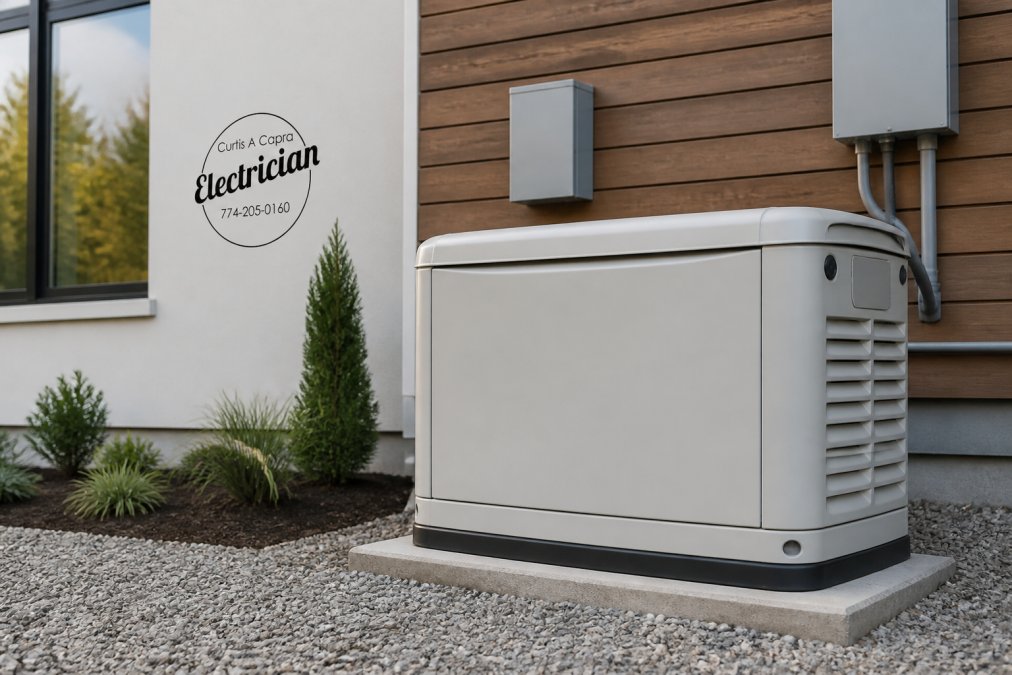
Standby generator installation services keep a home powered through winter storms and grid outages, and coastal properties face a higher risk of extended outages than inland homes. A standby unit runs on propane or natural gas, starts automatically within seconds of an outage, and requires professional sizing based on your home's actual load.
Sizing is where most DIY estimates fail. A generator that's too small will trip under load, and one that's too large wastes fuel. A licensed electrician performs a load calculation, installs a transfer switch, and coordinates with your fuel supplier. Generator maintenance matters as much as installation: annual service checks oil, filters, battery condition, and exercise cycles. Salt air accelerates corrosion on outdoor enclosures, so coastal installations benefit from a yearly inspection.
Commercial Electrical Repairs and Buildouts: What Business Owners Need
Commercial electrical repairs and buildouts follow different rules than residential work, starting with code requirements for occupancy, emergency lighting, and dedicated circuits. A retail space, office, or restaurant buildout needs a licensed electrical contractor who can pull commercial permits and coordinate inspections without stalling your opening date.
For repairs, downtime is the real cost. A tripped breaker in a walk-in cooler or a failed circuit in a point-of-sale system can shut down revenue within hours. Preventative maintenance, including panel thermal imaging and torque checks on connections, catches most failures before they happen. Business owners should ask for a service call response window in writing, not a verbal promise.
Energy Efficiency Audits and Heat Pump Upgrades That Cut Utility Bills
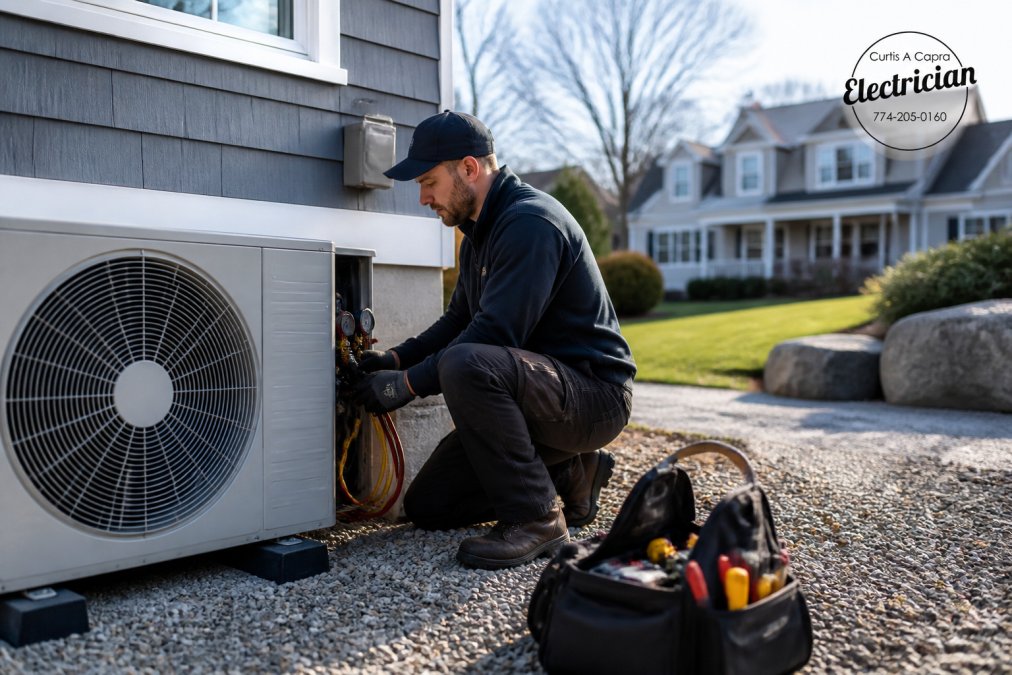
Energy efficiency audits identify where a home wastes power, and heat pump upgrades are one of the most effective changes a Cape Cod homeowner can make. A heat pump moves heat rather than generating it, which makes it far more efficient than resistance heating in most applications. But the savings only show up when the audit comes first and the sizing is done correctly, skip either step and you can spend thousands and still see a higher bill.
Start with the audit, not the equipment. A home energy assessment walks the house, checks insulation and air sealing, tests for drafts, and reviews your utility usage. The findings usually point to cheap fixes, attic air sealing, weatherstripping, duct sealing, that reduce the load before you size a heat pump. Doing the envelope work first means you can often install a smaller, less expensive system. That sequencing is the single most common thing homeowners get wrong.
How heat pump sizing actually works. A competent installer performs a room-by-room load calculation rather than guessing from square footage. The calculation accounts for window area, insulation values, ceiling height, and the design temperature the system must handle. A common mistake is undersizing ductwork or skipping the load calculation entirely, which leads to short cycling, uneven rooms, and higher bills. Cold-climate heat pumps have improved significantly and can carry a Cape Cod winter, but they still need correct sizing and a competent installer, the equipment is rarely the weak link.
What the work typically costs. Pricing varies with home size, existing ductwork, and whether a panel upgrade is needed. The only accurate number comes from an on-site assessment.
| Upgrade | Typical Cost Range | What Drives the Number |
|---|---|---|
| Home energy assessment | Often low-cost or no-cost through utility programs | Utility program terms and home size |
| Panel upgrade (200-amp) | Several thousand dollars | Service entrance condition, permit fees, meter socket |
| Ducted heat pump install | Five figures for a full-home system | Number of zones, duct condition, load calculation |
| Ductless mini-split (single zone) | Lower four figures per zone | Zone count, line-set run, electrical capacity |
| LED retrofit | Low hundreds to low thousands | Fixture count and whether cans need replacement |
Rebates and incentives. Curtis Capra Electrician is a participating Mass Save contractor, which means we can help homeowners access available incentives for qualifying efficiency upgrades. The Mass Save residential rebate programs cover a range of improvements, and federal tax credits may apply to qualifying heat pump installations as well. Amounts, eligibility, and program terms change, so confirm current figures before you budget and ask your contractor to document the qualifying equipment model numbers.
Where the money actually goes. For many homes, bill reductions can come from air sealing and insulation first, then a correctly sized heat pump, then LED retrofitting and smart thermostats to trim the remaining load. A panel upgrade is often the enabling step rather than a savings measure, you do it because the new heat pump and any EV charger need the capacity, not because the panel itself lowers your bill.
| Upgrade | Typical Benefit | Best For |
|---|---|---|
| Panel upgrade | Supports new high-draw appliances | Older homes adding heat pumps or EV chargers |
| Heat pump installation | Efficient heating and cooling | Homeowners replacing oil or electric resistance heat |
| Energy efficiency audit | Pinpoints waste before you spend | Any home with rising utility bills |
| Surge protection | Protects electronics and panel | Coastal homes with frequent outages |
Permitting, Code Compliance, and Cost Transparency in Cape Cod
Permitting and code compliance protect both your property value and your safety, and any contractor who treats them as optional is not one to hire. Electrical permits are required for most panel upgrades, new circuits, generator installs, and heat pump connections. The inspection that follows confirms the work meets current code.
Cost transparency is where estimates diverge. A fair quote breaks out labor, materials, permit fees, and any allowance for unforeseen conditions in older wiring. It also states what's excluded. If a quote is a single lump sum with no detail, ask for a line-item breakdown before signing. Pricing depends on project scope, panel condition, and access, so the only accurate number comes from an on-site assessment. Request a written quote from Curtis Capra Electrician and compare it line by line against any other estimate you receive.
Frequently Asked Questions
How do I verify if an electrician is licensed in Massachusetts?
Ask for the license number and check it through the Massachusetts Board of State Examiners of Electricians online lookup. A legitimate contractor will provide the number without hesitation. Curtis Capra Electrician holds LIC#57632B and carries full insurance and bonding. Never hire someone who cannot produce a valid license and certificate of insurance on request.
What should I look for when hiring electrical services for a home remodel?
Look for a contractor who pulls the electrical permit, coordinates with your general contractor on scheduling, and provides a written scope of work. Ask about their experience with older Cape Cod wiring, which often needs updating during renovations. Confirm they carry liability insurance and workers compensation coverage before any work begins.
Are there specific electrical code requirements for coastal properties?
Yes. Coastal homes face salt air corrosion, so outdoor outlets, panels, and fixtures need corrosion-resistant materials and proper sealing. Grounding and bonding must meet current National Electrical Code standards, and local building departments may require additional moisture protection. A licensed electrician familiar with Cape Cod conditions will know these requirements and pull the correct permits.
How much do electrical services in Cape Cod typically cost?
Pricing depends on the scope of work, materials, and whether permits are required. Curtis Capra Electrician provides free quotes so you get a clear number before work starts. Request a quote to see pricing for your specific project.
Electrical work on Cape Cod demands a contractor who understands coastal corrosion, local permitting, and the load demands of modern homes and businesses. Curtis Capra Electrician brings over 25 years of experience, full licensing and insurance, and specialized expertise in heat pump and standby generator installations. Get a free quote and put a licensed, insured professional on your project.