 How-to
Avoiding Project Delays During Home Renovations
Table of Contents
- Step 1: Lock Down Your Scope and Pre-Construction Plan
- Common Causes of Construction Delays on Cape Cod
- The Electrical Rough In Timeline for Renovations
- Hiring a Licensed Electrician for Remodels
- Managing Contractors, Communication, and Change Orders
- Legal Remedies and Psychological Management for Homeowners
- Digital Tools and Supply Chain Contingency Planning
- Frequently Asked Questions
Last Updated: September 21, 2026
Step 1: Lock Down Your Scope and Pre-Construction Plan
The most effective way of avoiding project delays during home renovations is to freeze your scope before demolition starts. A written plan with fixed finishes, fixture choices, and a signed contract prevents the daily decisions that stall job sites.
Most delays I see on Cape Cod don't start on the job site. They start at the kitchen table, months earlier, when nobody wrote down what "done" actually means.
Why Vague Drawings Create Change Orders Later
A change order is a written amendment to your contract that adds work, cost, or time. Vague drawings guarantee them. If your plans don't show outlet locations, fixture models, or panel capacity, your contractor has to guess. Guesses get corrected later, and corrections cost weeks.
Lock these before you sign:
- Final floor plans with electrical symbols marked
- Fixture and appliance model numbers
- A written list of what stays and what goes
- A signed allowance sheet for anything not yet chosen
Building a Contingency Budget That Actually Holds
A contingency budget is money set aside for unknowns, not a slush fund for upgrades. Hold it separately and treat it as untouchable unless a real site condition forces the spend.
A common approach is to reserve a portion of your total budget for surprises. Older Cape homes often hide knob-and-tube wiring, undersized panels, or water damage behind plaster. None of that shows up until walls open.
The rule is simple: if it wasn't in the original scope, it comes out of contingency.
Common Causes of Construction Delays on Cape Cod
Three culprits cause most renovation delays on Cape Cod: weather, permitting, and backordered materials. Each one is predictable, and each one is manageable with early planning.
Weather, Permitting, and Backordered Materials
The permitting process moves at the speed of your local building department, not your contractor. Submit early. Plans that sit in review for weeks push every trade back.
| Delay Cause | Typical Warning Sign | Best Prevention |
|---|---|---|
| Weather | Seasonal storm forecasts | Build buffer days into schedule |
| Permitting | Incomplete plan submissions | File early, respond fast |
| Backordered items | Long quoted lead times | Order long-lead items first |
| Change orders | Undecided finishes | Freeze scope before demo |
The Electrical Rough In Timeline for Renovations
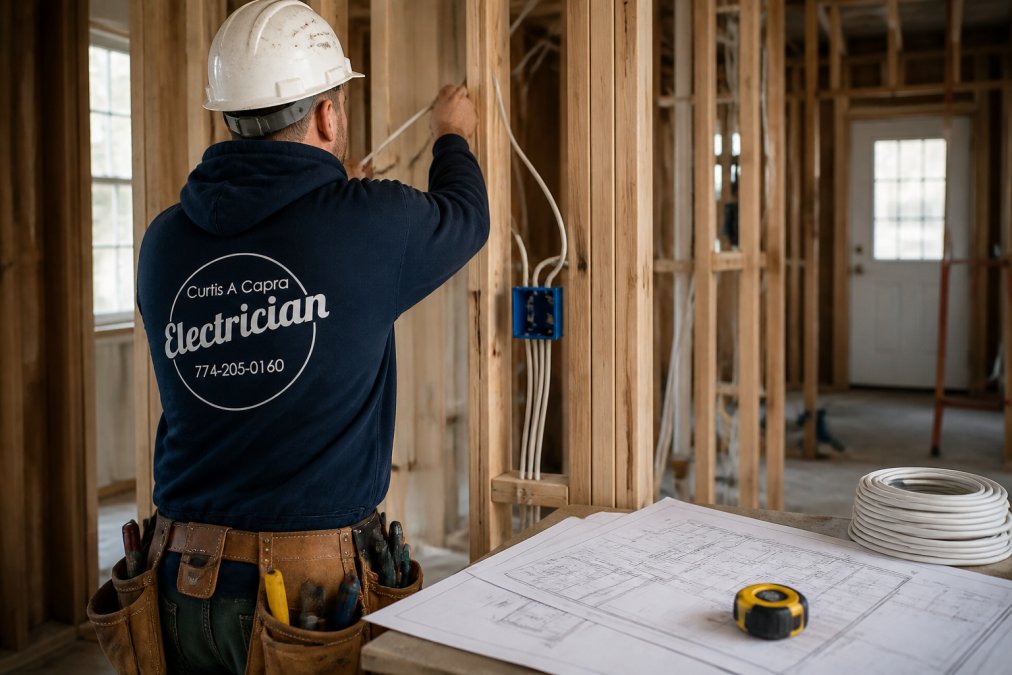
The electrical rough in timeline for renovations usually falls after framing and before insulation and drywall. This window is when electricians run wire, set boxes, and install the panel. Miss it, and every trade behind you waits.
Where Electrical Sits on the Critical Path
Rough-in depends on framing being complete and inspected. In turn, insulation and drywall depend on rough-in passing inspection. There's no slack in that chain.
Hiring a Licensed Electrician for Remodels
Before you sign anything, verify:
- Current state electrical license number
- Proof of insurance and workers' compensation
- A written scope with start and finish dates
- Permit responsibility spelled out in the contract
Curtis Capra Electrician works closely with licensed plumbers on integrated projects, which matters when a remodel touches both systems at once. That coordination keeps trades from tripping over each other on a tight schedule.
Managing Contractors, Communication, and Change Orders
Clear communication protocols prevent more delays than any scheduling software. Set a weekly check-in, a single point of contact, and a written log of every decision.
Legal Remedies and Psychological Management for Homeowners
Two things most renovation guides skip: your legal options and your mental health. Both matter when a project stretches past its promised date, and both are easier to manage before the first hammer swings.
What Your Contract Should Say About Delays
Your contract is the only leverage you have once work begins. Before you sign, look for these specific provisions:
- A defined substantial completion date. Not "spring" or "approximately eight weeks", a calendar date with a stated consequence if it slips.
- A liquidated damages clause. This sets a fixed daily credit to you if the contractor misses the completion date without a valid excuse. Courts generally enforce these when the amount is a reasonable estimate of actual harm, not a penalty. Ask a construction attorney in your state to review the language before you sign.
- A written change-order process. Every change should require your signed approval with the added cost and added days stated on the same page. No verbal changes, no "we'll settle up later."
- A right to withhold final payment. Hold a meaningful final payment until the punch list is complete and the final inspection passes. This is your strongest practical remedy.
- A dispute resolution path. Mediation first, then arbitration or court, spelled out so you are not guessing when a disagreement arises.
Managing Renovation Fatigue
Living in a construction zone wears people down in predictable ways. The dust, the noise, the loss of a functioning kitchen, and the constant decisions add up. Homeowners who plan for the disruption handle it far better than those who expect a clean timeline.
A few patterns that help:
- Set a temporary kitchen or bathroom. A microwave, mini-fridge, and a folding table in a spare room beats eating out every night for two months.
- Create one dust-free room. Seal the door with plastic sheeting and keep it as a retreat. Having one clean space changes the daily experience.
- Expect at least one delay. Contractors who tell you a renovation will finish exactly on schedule are either very lucky or not being honest. Build slack into your expectations.
- Schedule a weekly check-in. A short standing call with your contractor reduces the anxiety of not knowing what is happening.
- Protect your sleep and routine. Construction noise and early crew arrivals disrupt rest. Earplugs, a white noise machine, and a consistent bedtime help more than they sound like they would.
Digital Tools and Supply Chain Contingency Planning
Digital project management tools give homeowners visibility that paper schedules never could. The right app depends on how your contractor already works, forcing a new tool on a crew that runs on text messages creates friction, not clarity.
Tools That Actually Get Used
- Shared calendars. A Google Calendar or Apple Calendar shared with your contractor, electrician, and plumber is the lowest-friction option. Everyone already has it, and it works on any phone.
- Buildertrend or CoConstruct. These are contractor-side platforms that give homeowners a login to see the schedule, approve change orders, and message the team in one place. If your contractor already uses one, use it.
- Trello or Asana. A simple board with columns for "Not Started," "In Progress," and "Done" works well for homeowners managing their own subs on a smaller project.
- A shared photo album. A Google Photos or iCloud album where the crew uploads daily progress photos gives you a record and reduces the "what happened today?" phone calls.
- A single email thread or group text. For decisions, keep everything in writing. Verbal agreements about finishes or fixtures are how disputes start.
Pick one tool and stick with it. Two apps is worse than one, and three is worse than none.
Supply Chain Contingency Planning
- Custom or special-order windows and exterior doors
- Custom cabinetry and countertops
- Certain electrical panels, breakers, and specialty fixtures
- Tile and stone that ships from overseas
- HVAC equipment, especially heat pumps and high-efficiency units
For electrical gear specifically, a licensed local electrician who knows Cape Cod supplier lead times and inspection schedules can flag at-risk items early. Curtis Capra Electrician coordinates panel, breaker, and fixture orders with the rest of the renovation schedule so the rough-in is not waiting on a backordered part.
Frequently Asked Questions
What are considered excusable delays in construction?
Excusable delays are events outside anyone's control that push the schedule without penalizing the contractor. Common examples include severe weather, permitting backlogs at the local building department, undeliverable backordered materials, and unexpected site conditions like hidden rot or outdated wiring. In these cases, most contracts grant a time extension rather than financial damages. Review your agreement carefully, because what counts as excusable varies. Document every delay in writing, including dates and causes, so you have a clear record if a dispute arises later.
How can proper electrical planning prevent construction delays?
Electrical work sits on the critical path, so any hold-up ripples through framing, insulation, and drywall. Nail down your electrical rough in timeline for renovations before demolition starts, and confirm the panel has capacity for new circuits. A licensed electrician who reviews plans early can flag code issues, order specialty fixtures, and schedule inspections before walls close. Working with an experienced Cape Cod electrician like Curtis Capra Electrician means fewer surprises, faster sign-offs, and a smoother handoff to your general contractor.
What should you do if a contractor keeps delaying your project?
Start with a written notice referencing the schedule in your contract. Ask for a revised timeline with specific dates and reasons for each slip. If delays continue, check your state's contractor licensing board and consumer protection office for complaint procedures. Many contracts include mediation clauses that resolve disputes faster than court. Keep documentation of every call, text, and site visit. If the contractor is unresponsive or the work is substandard, a construction attorney can advise on contractual obligations and possible remedies like withholding payment or terminating the agreement.
How much of a contingency budget should homeowners set aside?
A common guideline is 10 to 20 percent of the total project cost, with older homes leaning toward the higher end. Cape Cod properties often hide outdated wiring, insufficient panel capacity, or moisture damage that only surfaces once walls open. A realistic contingency keeps small surprises from becoming full work stoppages. Keep those funds separate and untouched until an actual change order or unexpected site condition appears. If the project finishes under budget, you have money left for upgrades rather than debt.