 blog
blog
Heat Pump Installation Expert: Cape Cod Homeowner Guide
Table of Contents
- What a Heat Pump Installation Expert Actually Does on Cape Cod
- Electrical Panel Upgrades for Heat Pumps: Why They Matter
- Mass Save Heat Pump Rebates: How to Qualify and Apply
- Heat Pump Installation Cost Estimate: What Drives the Price
- Cold-Climate Performance and Coastal Durability on Cape Cod
- Maintenance, Noise Levels, and Long-Term ROI
- Frequently Asked Questions
Last Updated: September 14, 2026
What a Heat Pump Installation Expert Actually Does on Cape Cod
A heat pump installation expert handles load calculation, equipment selection, electrical infrastructure, and rebate documentation. At Curtis Capra Electrician, we've spent over 25 years wiring Cape Cod homes, and the electrical side of heat pump installation is where most projects quietly go wrong.
The first task is a room-by-room load calculation, or Manual J, which determines how much capacity your home needs (Manual J® Residential Load Calculation). Skip it and you get a system that short-cycles in summer and struggles in January.
Then comes equipment selection: cold-climate heat pumps rated for performance below freezing, not builder-grade units sold for milder markets. The expert also coordinates electrical work, dedicated circuits, disconnect placement, and often a panel upgrade.
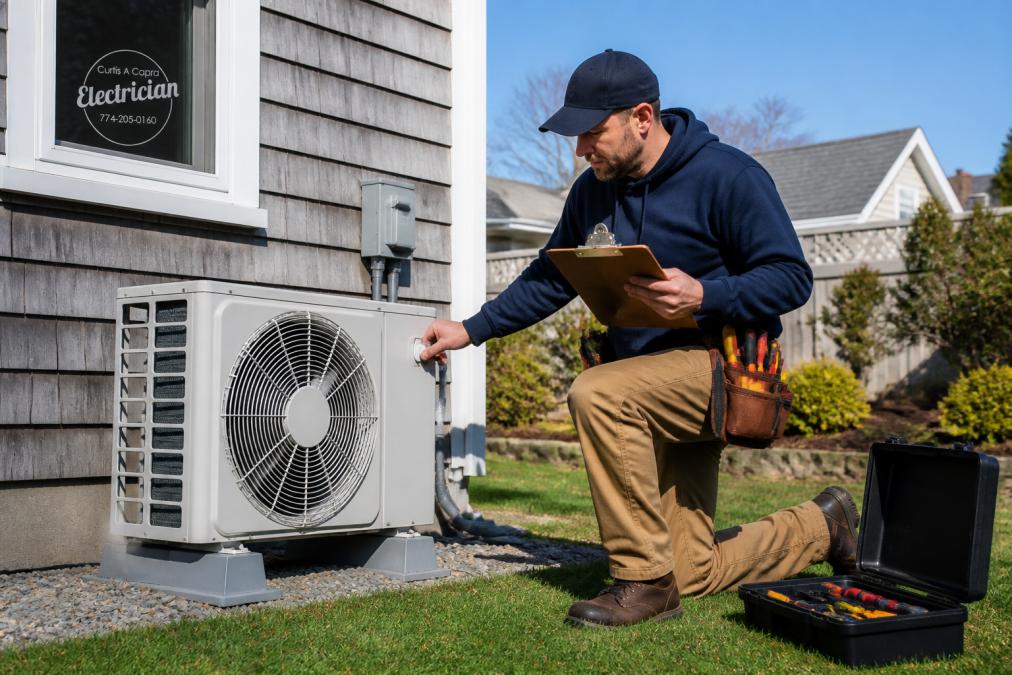
Finally, a real expert documents everything for rebate submission. That paperwork determines whether you collect thousands in incentives or pay full price.
Licensing, Mass Save Participation, and What to Verify
Ask for the license number first. In Massachusetts, electrical work requires a licensed electrician, verifiable through the state's official board (mass.gov). Curtis Capra Electrician holds LIC#57632B and carries full insurance.
Mass Save participation matters just as much: only work performed through a participating contractor qualifies for enhanced rebates. Ask for the Mass Save ID in writing.
Three things to verify before signing:
- Active state electrical license, confirmed on the state lookup
- Current Mass Save participating contractor status
- Certificate of insurance covering both liability and workers' compensation
If a contractor hesitates on any of these, walk away.
Ductless vs. Ducted: Which System Fits Your Home
Ductless mini-split systems win in most Cape Cod retrofits. Older homes here rarely have ductwork sized for a modern heat pump, and running new ducts through finished space is expensive and invasive.
Ducted systems make sense in two situations: new construction, where ducts can be designed correctly from the start, and homes with existing ducts that pass a pressure test. Leaky ducts lose a significant share of conditioned air, undermining the efficiency you paid for.
| System Type | Best For | Installation Impact | Efficiency Notes |
|---|---|---|---|
| Ductless mini-split | Retrofits, homes without ducts | Minimal wall penetrations | Zone-by-zone control |
| Ducted heat pump | New construction, sealed existing ducts | Higher, requires ductwork | Whole-home, single thermostat |
| Hybrid | Homes with partial duct coverage | Moderate | Ducted main areas, ductless additions |
The honest answer for most homeowners: ductless, unless you're building new or your ducts have been tested and sealed.
Electrical Panel Upgrades for Heat Pumps: Why They Matter
Most heat pump projects on the Cape require an electrical panel upgrade, which surprises homeowners more than any other cost. A heat pump draws significant amperage, and older 100-amp panels often cannot carry the added load (Residential Electrical Load Calculator for the Main Service).
Your electrician performs a load calculation on the existing service, adds the heat pump's demand, and determines whether your panel has capacity. If not, your options are a 200-amp panel upgrade, a subpanel for the heat pump circuit alone, or a load management device that lets equipment share capacity.
What most guides miss is sequencing: panel work must happen before or alongside the heat pump install, not after. Scheduling the electrician late delays the entire project, in winter, that means weeks without the new system.
A common mistake is hiring the lowest electrical bid without confirming the contractor understands heat pump load profiles. Heat pumps have different startup characteristics than resistance heating, and circuit design reflects that.
Mass Save Heat Pump Rebates: How to Qualify and Apply
Mass Save heat pump rebates are administered through the statewide energy efficiency program, and amounts change periodically. Confirm the exact rebate available to you on the official program site before you budget around it.
Qualification depends on the equipment's efficiency rating, whether your contractor is a participating Mass Save partner, and whether you complete a home energy assessment first, often a prerequisite, and free for most homeowners.
Step-by-Step Application Process
Here's how the process typically runs, based on the projects we complete:
- Schedule a no-cost home energy assessment through Mass Save. This establishes your baseline and unlocks eligibility.
- Get a written proposal from a participating contractor, listing equipment model numbers and efficiency ratings.
- Confirm the rebate amount for your specific equipment on the official program site before signing.
- Complete the installation with a participating contractor who documents the work properly.
- Submit the rebate application with invoices, model numbers, and proof of the energy assessment.
- Receive your rebate after the program reviews and approves the submission.
The most common reason applications get delayed is incomplete documentation. Model numbers that don't match the invoice, missing assessment records, or a contractor who isn't actually in the program. A participating contractor handles this paperwork as part of the job.
Heat Pump Installation Cost Estimate: What Drives the Price
A heat pump installation cost estimate varies widely because no two homes here are the same. What follows is the structure of a real estimate and the line items that move the total. Treat the figures as planning ranges, not quotes, and confirm pricing with a site visit.
The Line Items in a Real Estimate
A professional estimate breaks into five buckets. Ask for each one separately so you can compare bids apples to apples.
- Equipment. The outdoor condenser plus one or more indoor heads. Cold-climate-rated units carry a premium over standard models, and that premium is not optional in this climate.
- Labor. Line set runs, mounting, refrigerant charging, and commissioning. Long or complex refrigerant paths and second-story work add labor hours.
- Electrical. Dedicated circuits, disconnect, whip, and any panel work. This is the line item most generic estimates understate.
- Ductwork (ducted systems only). New duct design and installation, or sealing and pressure-testing existing ducts.
- Permits and documentation. Electrical permits, inspection scheduling, and rebate paperwork.
What Actually Moves the Number
Number of zones. A single-zone ductless mini-split is the lowest-cost entry point. Each additional indoor head adds equipment, line set, and labor. A whole-home system with four or five heads sits at the top of the range.
Electrical work required. If your panel has spare capacity and a clear breaker slot, the electrical line is modest. If you need a 200-amp service upgrade, a dedicated subpanel, or a load management device, that line item can rival the equipment cost. A load calculation during the site visit tells you which scenario you're in before you sign.
Ductwork. Ductless avoids it entirely. Ducted systems in new construction are straightforward because ducts are designed for the load from the start. Retrofitting ducts into a finished older home is the most expensive path, which is why ductless wins most retrofits here.
Equipment tier. Cold-climate-rated units cost more up front. The trade-off is capacity retention at low outdoor temperatures, the difference between a system that heats your home in January and one that leans on backup resistance heat and spikes your bill.
Line set runs. Short, direct runs are cheap. Long runs that snake around finished space, or require lifting equipment to a roof or high wall, add labor and materials.
How to Compare Bids Without Getting Burned
A low bid is usually low for a reason. The three most common shortcuts:
- No Manual J load calculation. The contractor sizes by square footage or by matching the old system, leaving you with an oversized or undersized unit.
- Undersized electrical. The contractor reuses an existing circuit instead of running a properly sized dedicated one, a code and safety problem, not just a performance one.
- No rebate documentation. The contractor is not a participating partner, so you forfeit incentives that would have offset a meaningful share of the project.
Ask every bidder for the load calculation, equipment model numbers with efficiency ratings, the electrical scope in writing, and confirmation of program participation. A bid that cannot produce those four things is not comparable to one that can.
For an accurate number, you need a site visit. A free quote should reflect your actual panel capacity, home layout, and equipment selection rather than a generic square-foot guess.
Cold-Climate Performance and Coastal Durability on Cape Cod
This is where generic heat pump advice falls apart. Two forces define performance here: cold that tests capacity retention, and salt air that tests durability. A third factor, the environmental case against the region's dominant heating fuel, is one almost no competitor addresses.
Cold-Climate Capacity Retention
Standard heat pumps lose heating capacity as outdoor temperature drops. Cold-climate-rated models hold capacity at low temperatures through variable-speed compressors and enhanced vapor injection. The practical difference: a cold-climate unit keeps delivering usable heat well below freezing, while a standard unit leans on backup resistance heat, expensive and defeating the efficiency you paid for.
Sizing interacts with this. An oversized system short-cycles and manages defrost poorly; an undersized one runs constantly and never catches up on the coldest nights. The Manual J load calculation gets this right, and it is the step budget installers skip.
Defrost Cycles, Explained
In heating mode, the outdoor coil runs colder than the air around it, so moisture condenses and freezes on the coil. The system periodically reverses into a defrost cycle to melt that frost. A properly sized, properly charged system defrosts efficiently and briefly; a poorly sized or undercharged one defrosts constantly, and every cycle is a few minutes of lost heating. In a humid coastal winter, defrost behavior is a real performance variable.
Salt-Air Corrosion: The Durability Mechanism
Salt spray accelerates corrosion of the outdoor unit's aluminum fins and steel cabinet. Standard coil coatings degrade faster near the water, and once the fins corrode, heat transfer efficiency drops and the unit works harder for less output. The defenses are specific:
- Corrosion-resistant coil coatings. Look for equipment with enhanced fin protection rated for coastal exposure.
- Cabinet and fastener materials. Painted or coated steel and corrosion-resistant fasteners outlast bare metal.
- Placement. Mount the unit away from direct salt spray, out of the prevailing onshore wind path, and off the ground so it is not sitting in splash zone moisture.
- Rinsing. Periodic freshwater rinsing of the outdoor coil removes accumulated salt. This is a maintenance step inland installers never mention.
A unit that would last many years inland can see meaningfully shortened service life steps from the water without these measures, the detail out-of-area installers miss, and why coastal equipment selection is not the same decision as it is 30 miles inland.
The Environmental Case Against Oil
Oil heating is still prevalent in older homes here, and the carbon comparison is stark. Heating oil combustion produces more carbon dioxide per unit of delivered heat than a modern cold-climate heat pump drawing from an increasingly clean regional grid. Swapping an aging oil boiler or furnace for a cold-climate heat pump cuts the home's heating-related carbon footprint substantially, and the reduction grows as the grid gets cleaner.
That reframes the decision: this is not just an efficiency upgrade but a fuel switch away from one of the highest-carbon heating options available, paired with the financial incentives that make the switch pencil out.
Maintenance, Noise Levels, and Long-Term ROI
Heat pump ROI depends on maintenance more than most homeowners expect. A neglected system loses efficiency steadily, and the energy savings you calculated at purchase quietly erode.
Follow-up maintenance should include:
- Filter cleaning or replacement every one to three months
- Annual professional inspection of refrigerant charge and electrical connections
- Coil cleaning, especially on coastal units exposed to salt
- Clearing debris and snow from around the outdoor unit
Noise is a legitimate concern, particularly for ductless systems mounted near bedrooms or property lines. Modern cold-climate units run quietly, but placement matters: an expert positions the outdoor unit away from windows and neighbors on vibration isolation pads, and sites indoor heads carefully.
Frequently Asked Questions
How much should a heat pump installation cost?
A heat pump installation cost estimate depends on system type, home size, and whether electrical panel upgrades for heat pumps are needed. Ductless mini-split systems typically cost less to install than ducted systems because they avoid ductwork modifications. Mass Save heat pump rebates can offset a significant portion of the total. Because pricing varies by project scope, request a free quote from a licensed installer for an accurate figure.
What qualifications should I look for in a heat pump installation expert?
Look for a licensed and insured electrician with specific heat pump experience, not just general HVAC knowledge. Verify the license number, confirm Mass Save participation, and ask how many heat pump systems they have installed in coastal climates. A qualified expert will also assess your electrical panel capacity before recommending equipment. Curtis Capra Electrician holds LIC#57632B and has over 25 years of experience with heat pump installations on Cape Cod.
Are heat pump rebates still available in Massachusetts?
Yes, Mass Save heat pump rebates remain available for qualifying installations. The program offers incentives for both ductless mini-split and ducted heat pump systems, with higher rebates for cold-climate models. To qualify, the installation must be performed by a participating contractor and meet efficiency requirements. Working with a Mass Save participating contractor like Curtis Capra Electrician simplifies the application process and helps ensure you receive the maximum rebate.
Are there specific electrical requirements for heat pump installations?
Most heat pump systems require a dedicated 240-volt circuit, and many Cape Cod homes need electrical panel upgrades for heat pumps to handle the added load. An installer should evaluate your existing panel amperage, available breaker spaces, and wiring condition. Older homes with 100-amp service often require an upgrade to 200 amps. A licensed electrician should always perform this assessment before installation to ensure safety and code compliance.