 blog
Outdoor Lighting Installation for Cape Properties: A Complete Guide
Table of Contents
- Why Outdoor Lighting Installation Matters for Coastal Homes
- Types of Outdoor Lighting Fixtures and Systems
- Benefits of LED Outdoor Lighting for Durability and Efficiency
- Landscape Lighting Design Tips for Curb Appeal and Security
- Coastal Outdoor Lighting Maintenance and System Longevity
- Professional Installation vs. DIY: When to Call an Electrician
- Smart Home Integration and Lighting Control Systems
- Getting Started with Curtis Capra Electrician
- Frequently Asked Questions
Last Updated: September 19, 2026
Why Outdoor Lighting Installation Matters for Coastal Homes
Saltwater air, moisture, and harsh weather create unique challenges for outdoor electrical systems. Coastal properties need specialized solutions that standard lighting simply can't provide. That's where professional outdoor lighting installation becomes essential, not just for aesthetics, but for durability and safety.
At Curtis Capra Electrician, we've learned what works and what fails within months. The difference between a system that lasts five years and one that lasts fifteen comes down to material selection, voltage choice, and proper installation technique. A coastal home with the wrong fixtures will see corrosion, flickering, and complete failure before you know it.
Outdoor lighting installation for cape properties isn't a luxury upgrade, it's a practical investment that protects your home's electrical infrastructure while dramatically improving curb appeal and security. Whether you're planning new construction, a renovation, or simply upgrading existing fixtures, understanding your options upfront saves money and frustration later.
Types of Outdoor Lighting Fixtures and Systems
The fixture you choose determines everything: how long it lasts, how much power it consumes, and whether it can survive saltwater exposure. There's no one-size-fits-all answer, but understanding the main categories helps you make the right call for your specific needs.
Low-Voltage vs. Line-Voltage Systems
Low-voltage systems operate at 12 or 24 volts and require a transformer to step down standard household current. Line-voltage systems use the full 120-240 volts directly from your home's electrical panel.
Low-voltage lighting is safer to install and modify yourself, uses less energy, and generates less heat. It's ideal for pathway illumination, accent lighting around gardens, and decorative applications where you want flexibility in fixture placement. The downside: you're limited in brightness and beam spread compared to line-voltage options, and the transformer itself needs proper installation and protection.
Line-voltage systems deliver brighter, more powerful light with greater reach. They're essential for security lighting, architectural uplighting on large structures, and illuminating expansive properties. The tradeoff is higher installation cost, stricter electrical code compliance, and the need for a licensed electrician like Curtis Capra Electrician to handle the work safely.
For most coastal homeowners, a hybrid approach works best: low-voltage accent and pathway lighting combined with strategic line-voltage security fixtures at entry points and property perimeters.
Marine-Grade and Weather-Resistant Options
Not all outdoor fixtures are created equal. Standard outdoor lighting will corrode within months in a coastal environment. Marine-grade fixtures use stainless steel housings, sealed gaskets, and specialized coatings designed specifically for saltwater exposure.
Look for fixtures rated IP67 or higher (these numbers indicate water and dust resistance). The housing material matters as much as the rating, aluminum fixtures corrode quickly, while 316 stainless steel resists salt air far longer. Brass and copper can work if properly sealed, but they require more maintenance.
Weather-resistant doesn't mean saltwater-resistant. A fixture rated for rain and snow might fail in six months on a coastal property. When shopping for outdoor lighting installation, always specify marine-grade or saltwater-resistant options. The upfront cost difference is typically 20-40% more, but you'll avoid replacing corroded fixtures every few years.
Benefits of LED Outdoor Lighting for Durability and Efficiency
LED technology has transformed outdoor lighting. Modern LED fixtures use 75% less energy than traditional incandescent or halogen bulbs, generate minimal heat, and last 25,000+ hours compared to 1,000-2,000 hours for older technology.
For coastal properties, LED efficiency translates directly to lower electricity bills and less frequent maintenance. LEDs also perform better in salt-air environments because they run cooler and don't attract as much corrosion around the fixture. The sealed LED modules are less vulnerable to moisture infiltration than older bulb technologies.
Color temperature matters for outdoor spaces. Warm white (2700K) creates inviting ambiance around patios and entryways. Cool white (4000K) works better for security lighting and task-oriented areas. Daylight (5000K+) is rarely used for residential applications, it feels harsh and institutional.
The best LED fixtures for coastal use combine marine-grade housing with dimmable LED modules and photocell sensors that automate on/off timing. This combination gives you energy savings, security, and the flexibility to adjust brightness without rewiring.
Landscape Lighting Design Tips for Curb Appeal and Security
Good outdoor lighting design balances three goals: highlighting your home's best features, creating safe pathways and entry points, and deterring unwanted activity. The worst approach is flooding your yard with bright light everywhere, it wastes energy, creates harsh shadows, and actually reduces security by blinding you to movement at the property edge.
Professional landscape lighting design uses layering: ambient light for overall visibility, accent lighting to showcase architectural details and landscaping, and task lighting for functional areas like driveways and entryways.
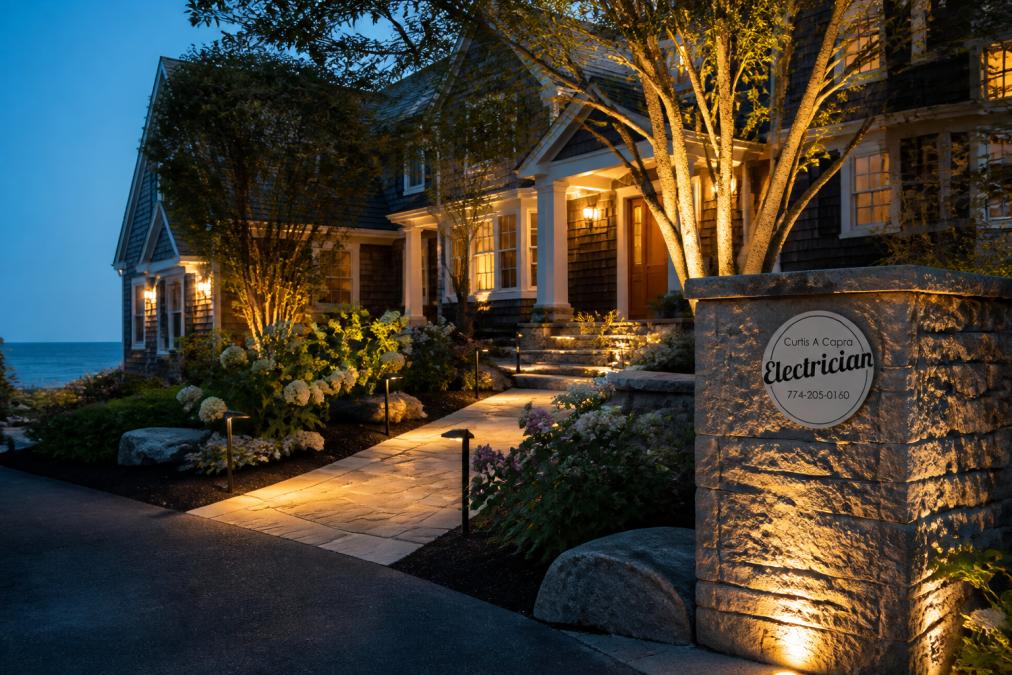
Accent Lighting, Pathway Illumination, and Ambient Effects
Accent lighting directs attention to specific features: a stone chimney, mature tree, or architectural detail. Uplighting from ground level creates drama and depth. Downlighting from eaves softens the effect and works better for plantings and walkways.
Pathway illumination serves dual purposes, it's practical for safe navigation and visually guides visitors toward your entrance. Low-voltage pathway lights spaced 4-6 feet apart along walkways provide adequate visibility without over-lighting. For coastal properties, choose fixtures with sealed LED modules to prevent moisture damage.
Ambient lighting creates overall visibility without spotlighting specific features. This is where many homeowners go wrong, they install too many fixtures at full brightness, creating a parking-lot effect. Instead, use fewer fixtures at moderate brightness, allowing darker areas between them.
Architectural Uplighting and Hardscape Lighting
Uplighting transforms how your home looks at night. Placing fixtures at ground level pointing upward toward roof lines, columns, or architectural details creates visual interest and increases perceived home value. For coastal properties, ensure uplighting fixtures are fully sealed and use stainless steel hardware.
Coastal Outdoor Lighting Maintenance and System Longevity
A well-installed system will last 10-15 years or longer, but only with proper seasonal maintenance. Coastal environments demand more attention than inland properties.
Saltwater Corrosion Resistance and Seasonal Care
Spring and fall are critical maintenance windows for coastal properties. Salt spray deposits accumulate on fixtures, connections, and transformer housings. A simple rinse with fresh water removes salt buildup before it accelerates corrosion. Check all connections for white or green oxidation, these indicate active corrosion.
HOA Compliance and Light Pollution Ordinances
Many coastal communities have light pollution ordinances limiting brightness, color temperature, and fixture direction. These rules exist to protect nocturnal wildlife and preserve dark skies. Before installing outdoor lighting, check your local HOA guidelines and municipal codes.
Professional Installation vs. DIY: When to Call an Electrician
Low-voltage pathway lighting is a reasonable DIY project if you're comfortable with basic wiring and have a transformer installed by a professional. You can add fixtures, adjust placement, and troubleshoot simple issues without calling an electrician every time.
Consider professional installation if your project involves:
- Line-voltage fixtures or new circuits from your electrical panel
- Transformer installation or upgrades
- Any work requiring trenching or running conduit
- Hardscape lighting integrated with deck or patio construction
- Smart home integration or automated lighting control
Smart Home Integration and Lighting Control Systems
Modern outdoor lighting systems integrate with home automation platforms. Smart bulbs and controllers let you adjust brightness, color temperature, and on/off timing from your phone. Motion sensors can trigger lights only when needed, reducing energy use and providing security.
Getting Started with Curtis Capra Electrician
Outdoor lighting installation for cape properties requires more than aesthetic choices, it demands understanding of coastal durability, electrical codes, and long-term maintenance. That's where professional guidance makes the difference.
| Lighting Type | Best Use | Voltage | Maintenance Level |
|---|---|---|---|
| Low-voltage pathway | Walkways, accent planting | 12-24V | Low |
| Line-voltage security | Entry points, perimeter | 120-240V | Moderate |
| Marine-grade fixtures | All coastal applications | Any | Moderate-High |
| Smart/automated | Flexible control, efficiency | Any | Low |
Frequently Asked Questions
Do I need a licensed electrician for outdoor lighting installation?
For line-voltage outdoor lighting systems and installations involving your home's main electrical panel, yes, you need a licensed electrician to ensure safety and compliance with electrical codes. Low-voltage systems (12V) sometimes allow DIY installation, but professional installation guarantees proper voltage drop calculations, weather-resistant connections, and warranty protection. Curtis Capra Electrician holds license #57632B and has over 25 years of experience with residential outdoor lighting installation.
What are the main benefits of LED outdoor lighting?
LED outdoor lighting offers significant advantages: 80% lower energy consumption than incandescent bulbs, 25,000+ hour lifespan reducing replacement frequency, superior durability in coastal weather, and available in various color temperatures (2700K-5000K) for design flexibility. LEDs also generate less heat, making them safer around landscaping, and work seamlessly with smart home control systems and photocell sensors for automated operation.
How does coastal weather affect outdoor lighting systems?
Saltwater air accelerates corrosion on standard fixtures, reducing lifespan and causing electrical failures. Marine-grade fixtures with stainless steel or powder-coated aluminum housings resist salt spray and UV damage. Regular seasonal maintenance, rinsing fixtures, checking connections for corrosion, and inspecting weather-resistant seals, extends system longevity. Professional installation by experienced electricians like Curtis Capra Electrician ensures fixtures are rated for coastal environments and properly sealed against moisture.
What's the difference between landscape lighting design and basic outdoor lighting?
Landscape lighting design uses strategic placement of accent lighting, pathway illumination, and architectural uplighting to enhance curb appeal, highlight landscaping features, and create ambient effects. Basic outdoor lighting typically provides functional security or porch lighting. Professional design considers beam spread, lumen output, color temperature, and fixture placement to achieve both aesthetic and security goals while respecting HOA compliance and light pollution ordinances on your property.