 blog
blog
Best Energy Efficient Lighting for Homes: 2026 Guide
Table of Contents
- Why Upgrading Your Home Lighting Matters
- LED vs CFL vs Incandescent Efficiency: Which Wins?
- Benefits of ENERGY STAR Certified Fixtures
- Smart Home Lighting Automation Tips
- How to Choose the Best Energy Efficient Lighting for Homes
- Installation and Safety: When to Call a Licensed Electrician
- Frequently Asked Questions
Last Updated: September 13, 2026
Why Upgrading Your Home Lighting Matters
Choosing the best energy efficient lighting for homes is one of the fastest ways to cut a stubborn electric bill, and it is usually the first upgrade we recommend to homeowners before they spend money on anything bigger. Lighting is a rare home improvement that pays you back every single month. At Curtis Capra Electrician, we have spent more than 25 years wiring and rewiring homes across Cape Cod, and the pattern is always the same: the bulbs and fixtures people never think about are quietly draining the most power.
Here is the part most guides get wrong. They treat lighting as a bulb-shopping decision when it is really a system decision. Bulbs, fixtures, controls, and wiring all interact, and swapping a bulb without checking the fixture's rating or your dimmer's compatibility is how people end up disappointed.
The stakes are simple. Lighting runs for hours every day in most rooms, so small efficiency gains compound fast. Below, we break down how the major bulb types actually compare, what certification really means, and how to choose the best energy efficient lighting for homes room by room.
LED vs CFL vs Incandescent Efficiency: Which Wins?
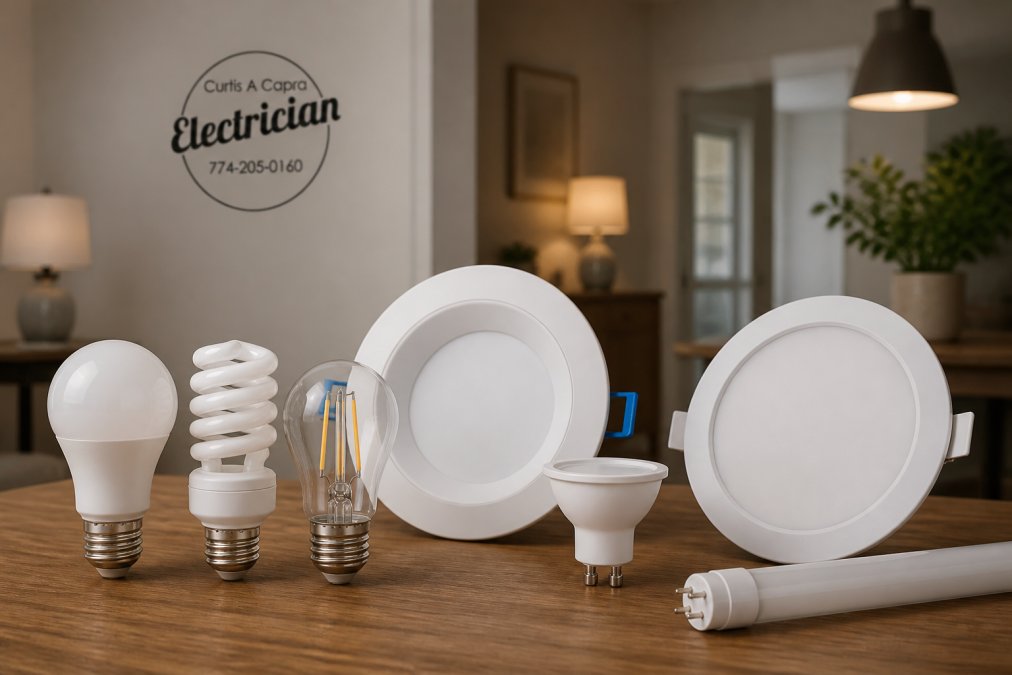
LED wins on efficiency, lifespan, and long-term cost, and it is not close. An LED converts most of the electricity it draws into visible light, while older bulb types lose the majority of that energy as heat. That single difference explains why the same brightness costs dramatically less to run.
How Each Bulb Type Converts Energy
Incandescent bulbs pass current through a filament until it glows, and roughly 90% of that energy leaves as heat rather than light (Purchasing Energy-Efficient Light Bulbs). CFLs use a gas and phosphor coating to produce light, which is far more efficient than a filament but still generates noticeable heat and takes time to reach full brightness. LEDs use a semiconductor to emit light directly, which is why they stay cool to the touch and use the least power for the same output.
In practice, this means a 60-watt incandescent replacement needs roughly 8 to 12 watts in LED form to produce the same brightness. That is the number that shows up on your bill.
Lifespan and Replacement Costs Compared
The U.S. Department of Energy guidance on lighting choices notes that LED bulbs last far longer than incandescent or halogen options, which changes the math beyond the sticker price. You are not just buying a cheaper bulb; you are buying fewer bulbs over the life of the fixture and fewer trips up a ladder.
| Bulb Type | Efficiency | Typical Lifespan | Heat Output | Best For |
|---|---|---|---|---|
| LED | Highest | Longest | Very low | Almost every room |
| CFL | Moderate | Moderate | Moderate | Low-use fixtures |
| Incandescent | Lowest | Shortest | High | Rarely worth it today |
| Halogen | Low | Short | High | Specialty display only |
Benefits of ENERGY STAR Certified Fixtures
ENERGY STAR certification means a fixture has been independently tested to meet federal efficiency standards, so you are not relying on the packaging's promises. For homeowners, the practical benefit is that certified fixtures are designed to work efficiently with efficient bulbs, and many are rated for sealed or enclosed spaces where heat buildup normally shortens bulb life.
The ENERGY STAR program for light fixtures explains that certified fixtures are tested for brightness, color quality, and durability, not just power draw. That matters because a cheap fixture can undercut everything a good bulb is supposed to do.
Where certification pays off most:
- Kitchens and bathrooms, where lights run constantly and heat matters
- Enclosed fixtures, where a non-rated bulb overheats and fails early
- Outdoor and security lighting, where reliability matters more than price
- Recessed cans, where airflow is limited and heat shortens lifespan
Smart Home Lighting Automation Tips
Automation is where efficiency gains stop being theoretical and start showing up automatically. The best energy efficient lighting for homes is lighting that turns itself off when a room is empty, and that is exactly what modern controls do.
Scheduling and Occupancy Sensors
Scheduling handles the predictable rooms: porch lights at dusk, kitchen lights off after bedtime. Occupancy and vacancy sensors handle the unpredictable ones, like the hallway, garage, and basement that nobody remembers to switch off. A common approach is to combine both, so lights follow a schedule but still respond to actual movement.
Voice Control and Scene Setting
Scenes let you set brightness by activity rather than by fixture. A "movie" scene dims the room to a lower level; a "cleaning" scene brings every light to full. Lower brightness settings draw less power, so scenes quietly reduce consumption without anyone thinking about it. Voice control and app scheduling add convenience, but the efficiency comes from the scenes themselves.
How to Choose the Best Energy Efficient Lighting for Homes
Start with the room's purpose, then match color temperature and brightness to it. The best energy efficient lighting for homes is not one universal bulb; it is the right bulb for each space, and getting color temperature right is what makes a room feel intentional rather than clinical.
Matching Color Temperature to Each Room
Color temperature is measured in kelvin (K), and it controls whether light feels warm or cool.
- 2700K to 3000K (warm white): living rooms, bedrooms, dining rooms
- 3500K to 4100K (neutral): kitchens, bathrooms, home offices
- 5000K and above (daylight): garages, workshops, task areas
Mixing temperatures in one open-plan space is the single most common design mistake we see. Keep the whole visible area on one temperature.
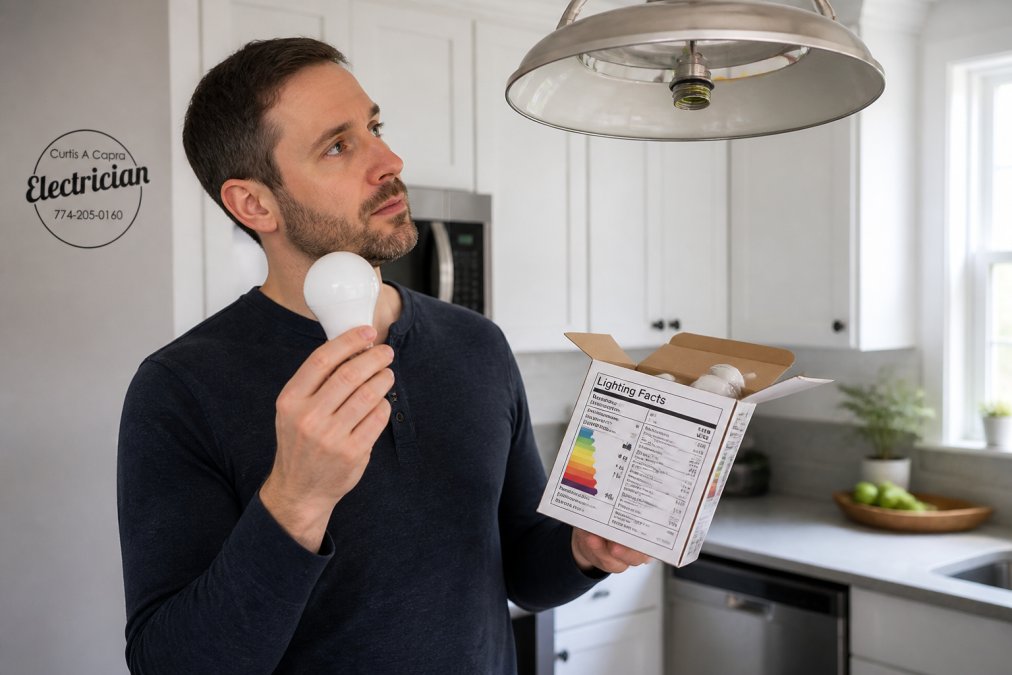
Reading the Lighting Facts Label
Every regulated bulb package carries a Lighting Facts label, and it answers the questions that actually matter:
- Brightness (lumens): how much light you get, not watts
- Estimated yearly energy cost: the running cost, not the purchase price
- Light appearance (kelvin): warm or cool
- Life (years): how long before replacement
- Wattage: the actual power draw
Buy by lumens and kelvin. Watts only tell you what it costs to run.
Installation and Safety: When to Call a Licensed Electrician
Replacing a bulb is a homeowner task. Replacing a fixture, adding a dimmer, or wiring a sensor is not always. The line is usually drawn at the box, not the bulb.
Call a licensed electrician when you are:
- Installing a new fixture where none existed
- Replacing a dimmer or adding a smart switch
- Working with aluminum wiring or an older panel
- Adding recessed lighting or a new circuit
- Installing outdoor or landscape lighting on a dedicated line
Older homes often have wiring that was never designed for the load modern lighting and appliances place on it. A fixture swap is a good moment to have the circuit checked, because the cost of ignoring it is a fire, not a flicker.
Upgrading your lighting is straightforward until it is not, and the moment you move past swapping bulbs, the wiring and the panel start to matter. That is where Curtis Capra Electrician comes in. We are a fully licensed and insured team (LIC#57632B) with over 25 years of experience, a participating Mass Save contractor, and specialists in heat pump and standby generator installations. Whether you need a single fixture replaced or a whole-home lighting plan designed and installed, we handle it safely and on schedule. Get a free quote from Curtis Capra Electrician and light your home for less.
Frequently Asked Questions
What is the most energy efficient type of light bulb for home use?
LED bulbs are the most energy efficient option for homes. They use about 75% less energy than incandescent bulbs and last 15 to 25 times longer. A 10-watt LED produces the same brightness as a 60-watt incandescent. CFLs are more efficient than incandescent but contain mercury and take time to warm up. For most rooms, LED is the clear winner on efficiency, lifespan, and safety.
Do LED lights actually save money on electricity bills?
Yes. LEDs convert most of their energy into light rather than heat, so they draw far fewer watts for the same brightness. Replacing just five frequently used incandescent bulbs with ENERGY STAR certified LEDs can save you money each year on electricity. The savings add up faster in rooms where lights stay on for hours, like kitchens, living rooms, and home offices.
What does the ENERGY STAR label mean for home lighting?
ENERGY STAR certified fixtures and bulbs meet strict efficiency standards set by the EPA. They use less energy, produce less heat, and last longer than standard options. Many ENERGY STAR fixtures are also compatible with dimmers and smart controls. Look for the blue label on the packaging to confirm certification. Mass Save may offer rebates on qualifying fixtures.
Are smart light bulbs more energy efficient than standard LEDs?
Smart LEDs use about the same wattage as standard LEDs, so the bulb itself is not more efficient. The savings come from automation. Scheduling lights to turn off when you leave, using motion sensors, and dimming to lower levels can cut wasted energy. If you already have LEDs, adding smart controls is the next step to reduce usage further.